- Introduction
- What is a Longsword?
- How Much Does a Longsword Weigh?
- Factors Influencing the Weight of a Longsword
- Why Does the Weight of a Longsword Matter?
- Comparative Analysis: Longsword Weight vs. Other Swords
- Is It Possible to Use a Longsword Single-Handedly?
- Longsword Pricing: Historical and Modern Contexts
- Common Mistakes When Evaluating Longsword Weight
- FAQs
Introduction
Longswords have captivated historians, martial artists, and fantasy enthusiasts alike. These iconic weapons often appear in historical battles, literature, and popular media. Understanding the weight of a longsword is crucial for enthusiasts and practitioners who aim to replicate historical accuracy or engage in realistic swordplay. This comprehensive guide will delve into the weight of longswords, what affects their weight, and how this vital statistic impacts their usability.
What is a Longsword?
A longsword, also known as a hand-and-a-half sword, is characterized by a cruciform hilt with a double-edged blade measuring approximately 90 to 110 centimeters (35 to 43 inches) in length. Originating in the late medieval period, longswords were favored for their versatility in both cutting and thrusting. They were wielded primarily with two hands, but could also be used single-handedly, allowing for a range of fighting techniques.
How Much Does a Longsword Weigh?
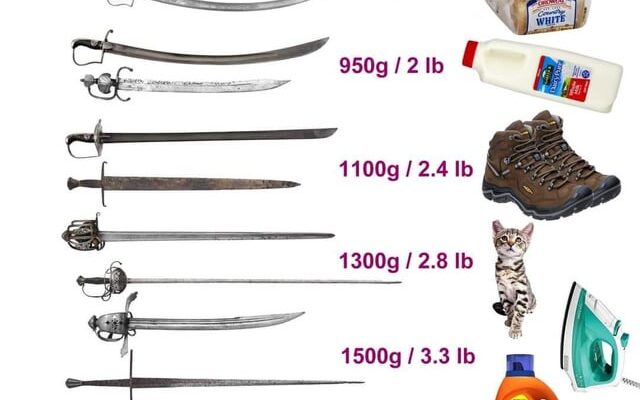
On average, a longsword weighs between 2.5 to 4 pounds, which is approximately 1.1 to 1.8 kilograms. However, the weight can vary based on the sword’s design, intended use, and historical period. Understanding these variations is crucial for anyone interested in historical fencing, reenactment, or owning a replica.
Factors Influencing the Weight of a Longsword
- Material: The type of steel used can affect the weight. Modern replicas might use different alloys compared to historical counterparts.
- Blade Length: Longer blades typically add more weight but provide greater reach.
- Blade Width and Thickness: A thicker blade is stronger but heavier, impacting the sword’s agility.
- Hilt Design: The crossguard and pommel add to the overall weight and balance of the sword.
- Historical Period: Designs evolved over centuries, ranging from heavier, broader blades to more slender, lighter designs.
Why Does the Weight of a Longsword Matter?
The weight of a longsword affects its handling characteristics, influencing the speed and power of strikes, as well as the stamina required to wield it. A heavier sword can deliver more force in a cut or strike, but may tire the user more quickly. Conversely, a lighter sword allows for quicker, more agile movements and is easier to handle for extended periods.
Comparative Analysis: Longsword Weight vs. Other Swords
| Type of Sword | Average Weight (Pounds) | Average Length (Inches) |
|---|---|---|
| Longsword | 2.5 – 4 | 35 – 43 |
| Broadsword | 3 – 5 | 30 – 40 |
| Rapier | 1 – 2.5 | 40 – 45 |
| Katana | 2.5 – 3.5 | 39 – 41 |
Is It Possible to Use a Longsword Single-Handedly?
While longswords are primarily designed for two-handed use, they can be wielded single-handedly for short durations or specific techniques. Historical manuals often depict scenarios where knights or soldiers switch to one-handed grips to maximize maneuverability and versatility, especially when equipped with a shield or other weapon.
Longsword Pricing: Historical and Modern Contexts
- Historical Value: Longswords were valuable assets in medieval times, often indicating status and wealth. Due to crafting complexity, they were expensive, yet essential in warfare.
- Modern Market: Longsword replicas can vary widely in price based on craftsmanship, material, and historical accuracy. Prices range from $200 for basic versions to over $1,000 for masterfully crafted replicas or customs.
Common Mistakes When Evaluating Longsword Weight
- Assuming Heavier is Better: Heavier longswords are not necessarily more effective, as they may hinder agility and speed.
- Neglecting Balance: Weight distribution is just as important as total weight for effectiveness and ease of use.
- Overlooking User Experience: A sword that feels too heavy or unwieldy might not perform well, regardless of its historical accuracy.
FAQs
- How much does a typical longsword weigh?
- A typical longsword weighs between 2.5 and 4 pounds, depending on factors like design, materials, and historical period.
- Which is better, a lighter or heavier longsword?
- Neither is inherently better; it depends on your fighting style and what you prioritize such as speed or power.
- Is it possible to use a longsword with one hand?
- Yes, it is possible to use a longsword with one hand, but it is primarily designed for two-handed use.
- What factors influence a longsword’s weight?
- The weight is influenced by materials used, blade length and width, hilt design, and the historical period of the design.
- How much can a modern-day longsword cost?
- Modern-day longsword replicas typically range from $200 to $1,000, depending on craftsmanship and materials.