- How Much Does It Cost to Live in the UK?
- Introduction
- Cost of Housing in the UK
- Types of Accommodation
- Utilities and Monthly Bills
- Groceries and Food Costs
- Average Grocery Prices
- Transportation Costs in the UK
- Public Transport Options
- Healthcare and Insurance Costs
- Education and Schooling Expenses
- Leisure, Entertainment, and Dining Out
- Hidden Costs and Common Mistakes
- FAQ
How Much Does It Cost to Live in the UK?
Considering a move to the UK? Understanding the cost of living in this vibrant nation is essential for planning your finances. From bustling cities like London to quaint countryside villages, the cost varies considerably. This comprehensive guide examines the factors that influence living expenses, average prices, and expert tips to help you budget effectively.
Introduction
Living in the UK is an exciting prospect, but it’s crucial to understand the diverse costs associated with different regions. Whether you’re a student, a professional, or retired, knowing how much you’ll need for housing, food, travel, and leisure ensures a smooth transition. This guide aims to cover everything from rent and groceries to hidden costs and common financial pitfalls.
Cost of Housing in the UK
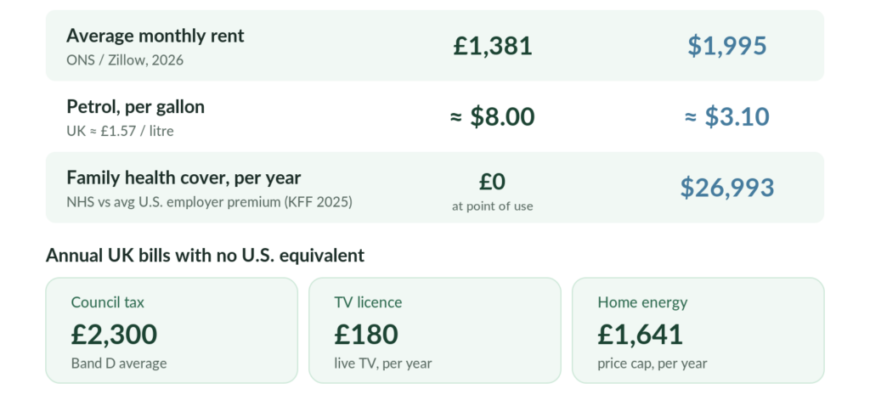
Housing is often the largest expense for UK residents. Prices vary based on location, property size, and type. London typically has higher rents compared to smaller towns and rural areas. According to the UK Government’s private rental market statistics, average rent in London is around £1,600 per month, while in other areas, it may range from £600 to £1,000.
Types of Accommodation
- Flats/Apartments: Suitable for singles and couples, common in urban areas.
- Houses: Ideal for families, offering more space and available in suburbs and countryside.
- Shared Accommodation: Cost-effective option popular among students and young professionals.
Utilities and Monthly Bills
Utility costs in the UK include electricity, gas, water, and internet. On average, monthly utility bills can range from £100 to £200. Factors such as property size and energy efficiency can affect costs. Access providers offer bundles that may include broadband, TV, and phone services, potentially driving up monthly expenses.
Groceries and Food Costs
Spending on groceries depends on lifestyle and dietary choices. The average UK household spends around £60-£100 per week on food. Known supermarkets like Tesco, Sainsbury’s, and Asda offer a wide range of products, while farmers markets provide fresh local produce.
Average Grocery Prices
| Item | Average Price (£) |
|---|---|
| Milk (1 liter) | 1.00 |
| Bread (loaf) | 1.20 |
| Eggs (dozen) | 2.30 |
| Chicken (1 kg) | 5.50 |
Transportation Costs in the UK
The cost of getting around includes public transport, car expenses, and cycling. In cities, using public transport is cost-effective, with monthly passes ranging from £55 to £150, depending on the city and zones. For car owners, fuel, insurance, and maintenance add up quickly, with average monthly costs around £200-£300.
Public Transport Options
- Buses: Widely available in cities and towns, offering single and monthly ticket options.
- Trains: Efficient for intercity travel but can be costly without a railcard.
- Underground/Metro: In major cities like London and Glasgow, offers a fast way to travel across the city.
Healthcare and Insurance Costs
The UK’s NHS provides free healthcare to residents, funded through taxation. However, many opt for private healthcare for shorter wait times, at a cost of approximately £1,500 per year. Health insurance is another consideration, with average monthly premiums around £100-£200, depending on coverage.
Education and Schooling Expenses
For families, schooling costs are an important consideration. State schools are free, but uniforms, trips, and extracurricular activities incur additional costs. Private schooling is an option for those seeking specific curriculums, and tuition can range from £5,000 to £15,000 per year.
Leisure, Entertainment, and Dining Out
Enjoying the UK’s rich culture doesn’t come cheap. Dining out varies greatly, with a meal at a mid-range restaurant costing about £20 per person. Entertainment like cinema, theatre, and gyms can add to monthly expenditures, averaging about £100-£200 monthly.
Hidden Costs and Common Mistakes
When budgeting for life in the UK, consider hidden costs, such as council tax, which differs by locality, and can cost £100-£200 monthly. Additionally, immigration-related costs, TV licenses, and unexpected repairs can strain budgets.
FAQ
- What is the average cost of living in the UK for a single person?
- The average cost for a single person can range from £1,500 to £2,500 a month, depending on location and lifestyle.
- Is it cheaper to live outside of London?
- Yes, living outside London can significantly reduce housing and transport costs.
- Which UK city is the most affordable to live in?
- Cities like Glasgow and Cardiff are considered more affordable compared to London and Cambridge.
- How can I save money living in the UK?
- Adopt budgeting strategies, use public transportation, and shop at discount stores to reduce costs.
- Are there financial assistance programs in the UK?
- Yes, programs like Universal Credit and Council Tax Reduction support eligible low-income residents.
This HTML block is structured to include the critical sections of the article, while also incorporating the FAQ schema needed for Google’s Rich Results. This will help you achieve your goal of optimizing for search engines and presenting comprehensive, useful information.