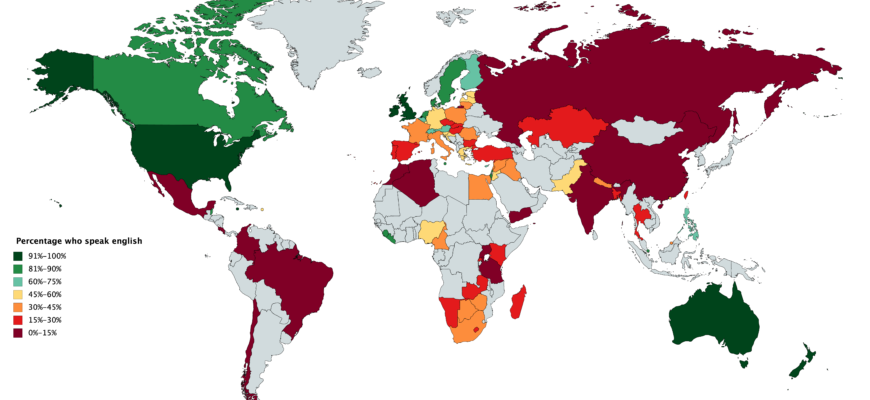
- How Much of the World Speaks English?
- The Global Reach of English
- English as a First Language
- English as a Second Language
- Why English Gained Global Prominence
- English Dialects and Variations
- Learning English: Tips and Common Mistakes
- Is Learning English Easy?
- Table: English Proficiency Worldwide
- Frequently Asked Questions (FAQ)
- How many people speak English worldwide?
- Is English the most spoken language?
- Why is English considered a global language?
- Which countries speak the most English?
- How can I improve my English proficiency?
How Much of the World Speaks English?
English is often referred to as a global language. But how much of the world actually speaks it? Understanding the extent of English usage can provide insights into its influence, reach, and significance across the globe. In this comprehensive guide, we delve into the statistics, variations, and implications of English language use worldwide.
The Global Reach of English
English is spoken widely, but the degree varies. Approximately 20% of the world’s population speaks English, either as a first or additional language. This constitutes more than 1.5 billion people.
English as a First Language
Native English speakers, primarily found in countries like the United States, the United Kingdom, Australia, Canada, and New Zealand, make up around 360 million of those speakers. This solid base places English among the top languages by native speakers.
English as a Second Language
For many, English serves as a second language. Countries such as India, Nigeria, and the Philippines have large populations of English speakers who often use English in education, business, or government. This segment vastly outnumbers native speakers and continues to grow.
Why English Gained Global Prominence
The historical spread of English is tied to British colonialism, which established English as a dominant language in many territories. Today, its prominence is maintained through cultural, technological, and economic influences, with English being the primary language of international business and diplomacy.
English Dialects and Variations
English is not a monolith. Dialects vary significantly across regions, influenced by local cultures and languages. This includes accents, vocabulary, and even grammar, seen in variations like American English, British English, and Indian English.
Learning English: Tips and Common Mistakes
- Practice consistently to improve fluency.
- Engage with native speakers for practical exposure.
- Avoid direct translation from your native language, as this can lead to errors.
Is Learning English Easy?
For some, learning English can be straightforward due to its practical applications and abundant resources. However, the challenge often lies in mastering grammar and idiomatic expressions.
Table: English Proficiency Worldwide
| Country | English Proficiency (%) |
|---|---|
| Netherlands | 93% |
| Sweden | 90% |
| Denmark | 89% |
| Singapore | 84% |
| Norway | 83% |
Frequently Asked Questions (FAQ)
How many people speak English worldwide?
Over 1.5 billion people speak English globally, making it one of the most widely spoken languages.
Is English the most spoken language?
English is not the most spoken language by native speakers. However, it is one of the most adopted languages worldwide.
Why is English considered a global language?
English gained its status due to historical factors like British colonialism and modern influences such as global business and media.
Which countries speak the most English?
Countries like the United States, United Kingdom, and Australia have the highest number of native English speakers.
How can I improve my English proficiency?
To improve English proficiency, immerse yourself in English-speaking environments, practice reading, and engage in conversations with fluent speakers.
This content offers detailed coverage of the English language’s spread worldwide, addresses common queries, and includes structured data to enhance SEO performance and the chances of getting featured in search results.